
Clinical Rationale & Evidence
What goes into your care at Harcourt Brain Center, why, and how strong the research is for each part.
Harcourt Brain Center in York, Pennsylvania is a next-step neurorehabilitation center for people whose migraine, dizziness or post-concussion symptoms haven’t fully improved with standard care, including people who are sensitive to medication. We work alongside your neurologist, ENT, headache specialist or primary care doctor, after appropriate medical evaluation.
This page explains the reasoning behind our care. For each part of a treatment plan, it shows what the research supports, how strong that support is, and where the evidence is still early. We think you, and the doctors who refer to us, deserve that clarity before you decide on care.
HOW TO READ THIS PAGE
We sort every part of our care into one of three groups:
- Established: supported by clinical practice guidelines, consensus statements or systematic reviews of randomized trials.
- Supported, lower certainty: backed by randomized trials or guidelines, but with smaller studies, mixed results or a narrower use.
- Emerging and optional: promising early research, or reasonable on clinical grounds, but not yet proven in large trials.
Most of our patients’ plans are built mainly from the first group.
Our Role in Your Care
- Medical evaluation comes first. Before rehabilitation, serious causes need to be ruled out. Depending on your symptoms, that may include imaging, an ENT or neurology evaluation, or emergency care after a head injury. If you haven’t had the workup you need, we’ll refer you.
- We don’t start or change medications. If you take migraine or other medications, we work with your prescribing physician to help guide appropriate care.
- We share findings with your doctors. With your permission, we can send your exam findings and progress updates to the clinicians who referred you or who manage your care.
- We tell you when we’re not the right fit. If your exam points to a problem that needs a different specialist, we’ll say so and help you get there. We have relationships with both local providers and larger medical systems in PA and MD.
How We Evaluate
Your first visit includes a detailed history and a functional neurological exam. Depending on your symptoms, we may add computerized testing:
- VOG eye-movement testing, which records eye movements with infrared video goggles
- Sinusoidal rotational (rotary chair) testing of the inner-ear reflexes
- BTrackS balance testing
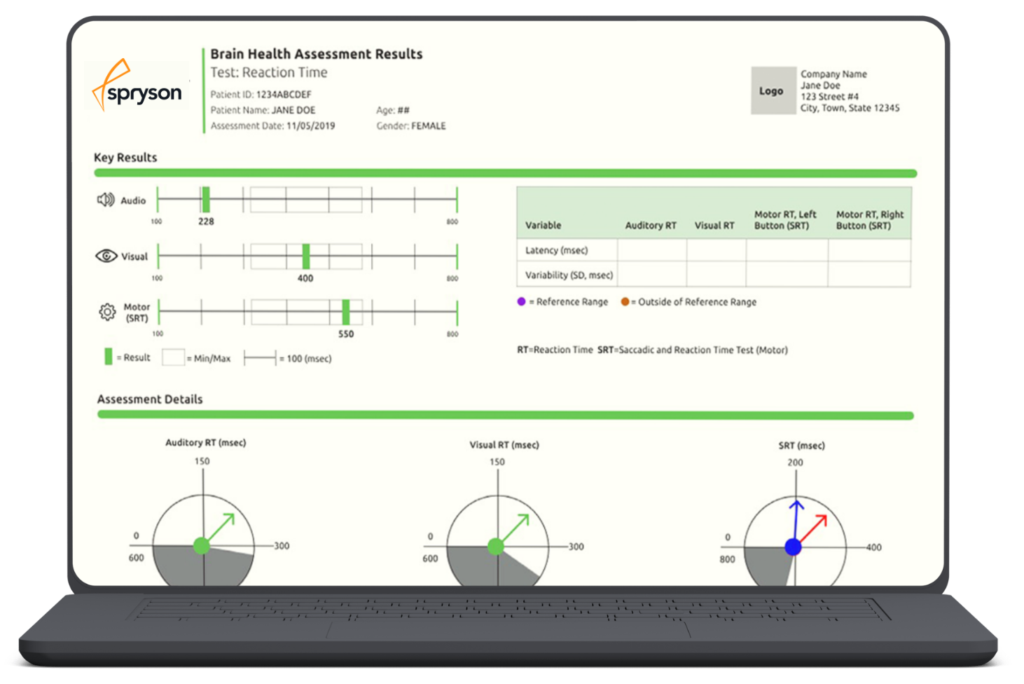
- Dynavision D2 visual reaction-time testing
- An exam of your neck, posture and coordination
These tests measure how your vestibular, visual and balance systems are working, and give us a baseline to re-test against. They don’t replace a medical diagnosis or imaging. Vestibular migraine and persistent postural-perceptual dizziness (PPPD) are diagnosed by their published clinical criteria, often after other tests come back normal.[20][21]
Established Components of Care
Vestibular Rehabilitation
Vestibular rehabilitation uses targeted head, eye and balance exercises to retrain how the inner ear and brain work together. A Cochrane review of 39 studies with 2,441 participants found moderate to strong evidence that it’s safe and effective for inner-ear (peripheral vestibular) dizziness.[1] For vestibular migraine, a 2026 meta-analysis of 7 studies with 413 patients found an average 29-point improvement on the Dizziness Handicap Inventory, well above the 18-point change considered clinically meaningful. The studies varied widely, so better trials are still needed.[2] For PPPD, specialized vestibular rehabilitation is a core part of recommended treatment.[3][4]
Repositioning Maneuvers for BPPV
Benign paroxysmal positional vertigo (BPPV) is caused by loose inner-ear crystals. The American Academy of Otolaryngology–Head and Neck Surgery guideline recommends treating the most common form with a canalith repositioning maneuver, a series of head movements done in the office.[5] For BPPV, these maneuvers work faster than exercise alone.[1]
Cervical and Vestibular Rehabilitation After Concussion
In a randomized trial of young athletes with lasting dizziness, neck pain or headaches after concussion, 73% of those who received combined neck and vestibular therapy were medically cleared to return to sport within 8 weeks, compared with 7% of the control group.[6] A 2023 systematic review prepared for the international concussion consensus recommends cervicovestibular rehabilitation for adolescents and adults whose dizziness, neck pain or headaches last more than 10 days.[7]
Graded Aerobic Exercise
After concussion, carefully dosed aerobic exercise below the level that brings on symptoms helps recovery. In a randomized trial of adolescents, those who did this exercise recovered in a median of 13 days, versus 17 days for those who only stretched.[8] The 2022 Amsterdam consensus on concussion supports early light activity rather than strict rest.[9] For migraine, a randomized trial found that 40 minutes of exercise three times a week reduced attacks about as much as the preventive drug topiramate.[10] This makes exercise a reasonable option for people who can’t tolerate medication.
Education and Daily Self-Management
Clear communication about the diagnosis is a core part of treating chronic dizziness such as PPPD,[4] and the American Headache Society lists behavioral approaches such as relaxation training and biofeedback among appropriate migraine treatments.[12] We explain your exam findings in plain language and teach daily routines, such as regular sleep, meals and a home exercise program, so you can keep your progress after formal care ends.
Supported Components With Lower Certainty
Nutritional Supplements for Migraine Prevention
A guideline from the American Academy of Neurology and the American Headache Society rates magnesium, riboflavin (vitamin B2) and feverfew as probably effective for preventing episodic migraine, and coenzyme Q10 as possibly effective.[11] The guideline was last updated in 2012 and the studies are small. When we recommend supplements, we tell you which ones, why, and how we’ll judge whether they’re helping. Dr. Harcourt has helped develop multiple migraine supplements to make navigating this process easier. You can find both MQ-7 and MGR at the Biogenic Nutrition website, or learn more about MQ-7 here.
Manual Therapy for Neck-Related Dizziness and Headache
A systematic review found moderate-quality evidence that manual therapy reduces neck-related (cervicogenic) dizziness, neck symptoms and balance problems, with a stronger effect when combined with exercise.[13] Chiropractic practice guidelines recommend spinal manipulation and multimodal care for migraine, but the evidence doesn’t exceed a moderate level.[14] We use manual therapy for neck pain and neck-related symptoms, and pair it with cervical spine proprioceptive retraining exercises.
Non-Invasive Nerve Stimulation
Several external nerve-stimulation devices are FDA-cleared for migraine. In randomized, sham-controlled trials, 38% of people using forehead (supraorbital) stimulation cut their monthly migraine days by at least half, versus 12% with sham,[15] and upper-arm remote electrical neuromodulation gave pain relief at 2 hours for 67% of patients, versus 39% with sham.[16] Results aren’t uniform, though. In a large trial of vagus nerve stimulation for migraine prevention, the device didn’t outperform sham overall.[17] This is why a customized treatment approach is crucial for every migraine patient. The American Headache Society’s consensus statement lists several neuromodulation devices as appropriate migraine treatments, chosen according to each patient’s characteristics and preferences.[12]
Low-Level Laser Therapy for Neck Pain & Migraine
Our Erchonia low-level laser is FDA-cleared for pain. A Lancet meta-analysis of 16 randomized trials with 820 patients found that it reduced neck pain right after treatment for acute pain, and for up to 22 weeks after treatment for chronic neck pain.[18] In addition, a 2018 study in Brazil found that LLLT showed a similar reduction to Botox, and even continued to show improvement after treatment was discontinued.[22]
Emerging and Optional Approaches
These approaches are promising or reasonable on clinical grounds, but they haven’t been proven in large trials. We offer them only as add-ons, explain why we’re suggesting them, and you can always say no.
- Light therapy for the brain (transcranial photobiomodulation): a 2024 systematic review found improved cognition in people with chronic traumatic brain injury.[19] We consider this early-stage research.
- Hormonal testing and support for migraine: hormonal changes are a well-known migraine trigger, especially around the menstrual cycle. Using detailed hormone testing to guide supplements, as in our Remote Migraine Program, is based on clinical experience and hasn’t been tested in randomized trials.
- Visual reaction training (Dynavision D2) and high-frequency vibration therapy: useful tools for training reaction time and sensory processing, with limited research specific to migraine or concussion.
The 4-Factor Migraine Framework
Dr. Harcourt organizes migraine care around four factors: hormonal, nutritional, musculoskeletal and neurological. His Bucket Theory explains how they combine: when the total load from these factors exceeds a person’s threshold, a migraine starts. Each factor draws on the research above, such as the nutritional supplement guideline, manual therapy and neck research, and vestibular rehabilitation and exercise studies. The framework itself is a clinical model that organizes this research. It hasn’t been tested as a single program in a randomized trial, and we don’t present it as if it has.
Dr. Harcourt teaches this framework to doctors through the Carrick Institute’s Mastering Migraine program and explains it in his book, Mastering Migraine. See his research and media appearances and speaking engagements.
What to Expect
Many of our patients have had symptoms for months or years, and results vary. Some people improve a lot, some improve partly, and some need ongoing support to keep their gains. We aim for meaningful improvement in how you function day to day, not promises of a cure. To keep care accountable:
- We re-test at planned checkpoints and compare the results with your baseline.
- If you aren’t improving as expected, we’ll talk with you about changing the plan, pausing, or referring you elsewhere.
- Before care ends, you get a home program and a plan for what to do if symptoms flare up again.
Frequently Asked Questions
Is Harcourt Brain Center a replacement for my neurologist?
No. Once you have ruled out any overt pathologies (i.e stroke, tumor, infection, etc.), we can focus on what is causing your symptoms and how best to provide relief. Your neurologist, ENT, headache specialist or primary care doctor handles various other conditions and medication management. With your permission, we send them our findings and progress updates.
What should I have done before my first visit?
After a head injury, any emergency causes such as bleeding should be ruled out first. For dizziness or migraine, it helps to have seen your primary care doctor, neurologist or ENT. If you haven’t had the evaluation you need, we’ll refer you.
Which parts of your care have the strongest evidence?
Vestibular rehabilitation, repositioning maneuvers for BPPV, combined neck and vestibular rehabilitation after concussion, and graded aerobic exercise have the strongest support. Supplements, manual therapy, nerve stimulation and laser therapy have moderate or narrower support, and some add-on therapies are still emerging.
Do you guarantee results?
No. Results vary from person to person. We set expectations at the start, re-test at planned checkpoints, and adjust or refer you if you aren’t improving as expected.
Can I be treated if I can’t take migraine medications?
Yes. Many of our patients are sensitive to medication or have stopped responding to it. Exercise, vestibular rehabilitation, certain supplements and FDA-cleared nerve-stimulation devices are non-drug options with research support. Please talk with your doctor before stopping any medication.
This page is for education and doesn’t replace care from your physician. If you have a sudden severe headache, new weakness or numbness, trouble speaking, vision loss, fainting, or confusion after a head injury, call 911 or go to the nearest emergency room.
Medically reviewed by Dr. Adam Harcourt, DC, DACNB, FACFN, FABVR. Last reviewed October 2026.
References
- McDonnell MN, Hillier SL. Vestibular rehabilitation for unilateral peripheral vestibular dysfunction. Cochrane Database Syst Rev. 2015;1:CD005397. PubMed 25581507
- El Ahdab J, et al. The effect of vestibular rehabilitation in the management of vestibular migraine in adults: A systematic review and meta-analysis. Headache. 2026;66(1):77-87. PubMed 41288240
- Nada EH, Ibraheem OA, Hassaan MR. Vestibular Rehabilitation Therapy Outcomes in Patients With Persistent Postural-Perceptual Dizziness. Ann Otol Rhinol Laryngol. 2019;128(4):323-329. PubMed 30607985
- Popkirov S, Staab JP, Stone J. Persistent postural-perceptual dizziness (PPPD): a common, characteristic and treatable cause of chronic dizziness. Pract Neurol. 2018;18(1):5-13. PubMed 29208729
- Bhattacharyya N, et al. Clinical Practice Guideline: Benign Paroxysmal Positional Vertigo (Update). Otolaryngol Head Neck Surg. 2017;156(3_suppl):S1-S47. PubMed 28248609
- Schneider KJ, et al. Cervicovestibular rehabilitation in sport-related concussion: a randomised controlled trial. Br J Sports Med. 2014;48(17):1294-8. PubMed 24855132
- Schneider KJ, et al. Targeted interventions and their effect on recovery in children, adolescents and adults who have sustained a sport-related concussion: a systematic review. Br J Sports Med. 2023;57(12):771-779. PubMed 37316188
- Leddy JJ, et al. Early Subthreshold Aerobic Exercise for Sport-Related Concussion: A Randomized Clinical Trial. JAMA Pediatr. 2019;173(4):319-325. PubMed 30715132
- Patricios JS, et al. Consensus statement on concussion in sport: the 6th International Conference on Concussion in Sport-Amsterdam, October 2022. Br J Sports Med. 2023;57(11):695-711. PubMed 37316210
- Varkey E, et al. Exercise as migraine prophylaxis: a randomized study using relaxation and topiramate as controls. Cephalalgia. 2011;31(14):1428-38. PubMed 21890526
- Holland S, et al. Evidence-based guideline update: NSAIDs and other complementary treatments for episodic migraine prevention in adults. Neurology. 2012;78(17):1346-53. PubMed 22529203
- Ailani J, et al. The American Headache Society Consensus Statement: Update on integrating new migraine treatments into clinical practice. Headache. 2021;61(7):1021-1039. PubMed 34160823
- De Vestel C, et al. Systematic review and meta-analysis of the therapeutic management of patients with cervicogenic dizziness. J Man Manip Ther. 2022;30(5):273-283. PubMed 35383538
- Bryans R, et al. Evidence-based guidelines for the chiropractic treatment of adults with headache. J Manipulative Physiol Ther. 2011;34(5):274-89. PubMed 21640251
- Schoenen J, et al. Migraine prevention with a supraorbital transcutaneous stimulator: a randomized controlled trial. Neurology. 2013;80(8):697-704. PubMed 23390177
- Yarnitsky D, et al. Remote Electrical Neuromodulation (REN) Relieves Acute Migraine: A Randomized, Double-Blind, Placebo-Controlled, Multicenter Trial. Headache. 2019;59(8):1240-1252. PubMed 31074005
- Diener HC, et al. Non-invasive vagus nerve stimulation (nVNS) for the preventive treatment of episodic migraine: The multicentre, double-blind, randomised, sham-controlled PREMIUM trial. Cephalalgia. 2019;39(12):1475-1487. PubMed 31522546
- Chow RT, et al. Efficacy of low-level laser therapy in the management of neck pain: a systematic review and meta-analysis of randomised placebo or active-treatment controlled trials. Lancet. 2009;374(9705):1897-908. PubMed 19913903
- Zeng J, et al. Can transcranial photobiomodulation improve cognitive function in TBI patients? A systematic review. Front Psychol. 2024;15:1378570. PubMed 38952831
- Lempert T, et al. Vestibular migraine: Diagnostic criteria. J Vestib Res. 2022;32(1):1-6. PubMed 34719447
- Staab JP, et al. Diagnostic criteria for persistent postural-perceptual dizziness (PPPD): Consensus document of the committee for the Classification of Vestibular Disorders of the Bárány Society. J Vestib Res. 2017;27(4):191-208. PubMed 29036855
- Loeb LM, et al. Botulinum toxin A (BT-A) versus low-level laser therapy (LLLT) in chronic migraine treatment: a comparison. Arq Neuropsiquiatr. 2018;76(10):663-667. PubMed 30427505