
VOG Eye Movement Testing (Video-oculography)
Your eyes are a window into how your brain is working. At Harcourt Brain Center, we use FDA-cleared video-oculography (VOG) eye-tracking technology from Spryson America (formerly Neuro Kinetics). It records your eye movements with infrared cameras and compares them with normal ranges, revealing problems that are too small or too fast to see during a regular exam.
About the technology
Neuro Kinetics, the company behind the I-Portal® eye-tracking systems, spent more than two decades developing high-precision eye-tracking and vestibular testing used by universities, the military, and specialty clinics. Its technology is now made by Spryson America in Pittsburgh, PA.
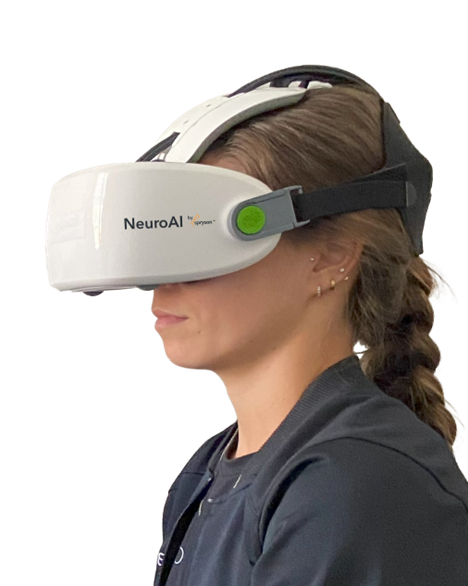
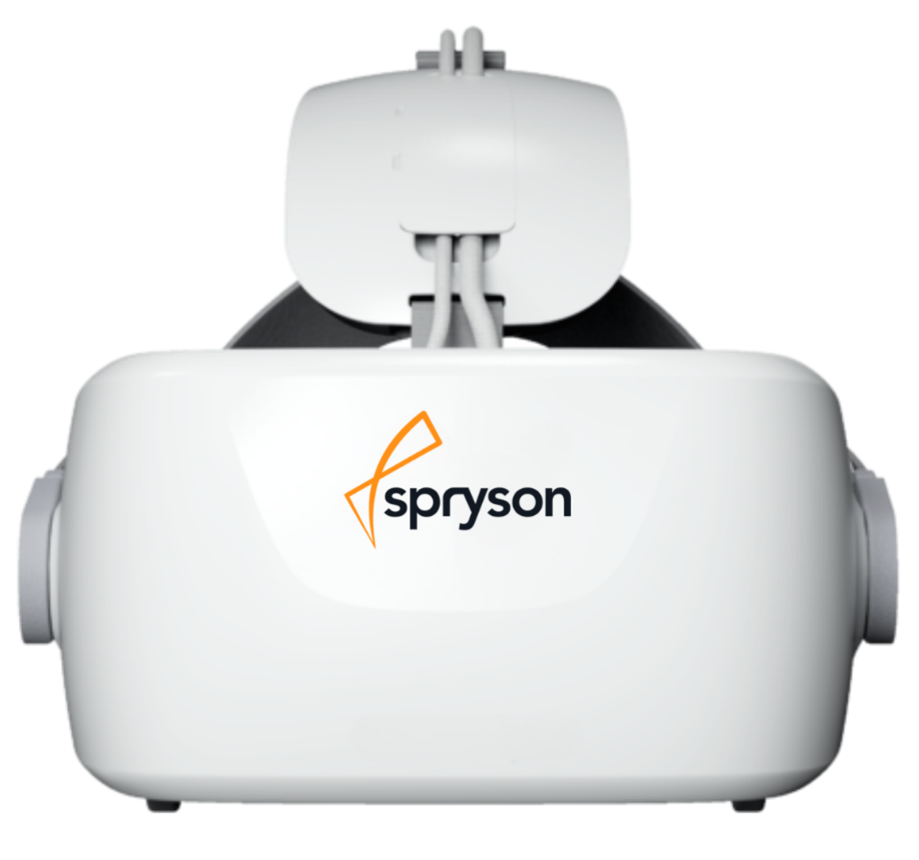
The VOG goggles track both eyes at once, recording horizontal, vertical, and torsional (rotational) eye movements as well as pupil size (FDA 510(k) K181025). The analysis software compares every result with published normative ranges, so we can see exactly where your responses fall outside normal.
What we measure
- Saccades: fast jumps between targets, including antisaccades (looking away from a target) and predictive saccades. These involve thinking and planning as well as eye control.
- Smooth pursuit: how smoothly your eyes follow a moving target.
- Optokinetic responses: how your eyes react to moving visual patterns.
- Vergence: how your eyes work together as a target moves closer and farther away.
- Nystagmus and gaze testing: involuntary eye movements that can point to an inner ear or brain cause of dizziness, including positional testing for BPPV.
- Subjective visual vertical and horizontal: your sense of what is level, which reflects inner ear (otolith) function.
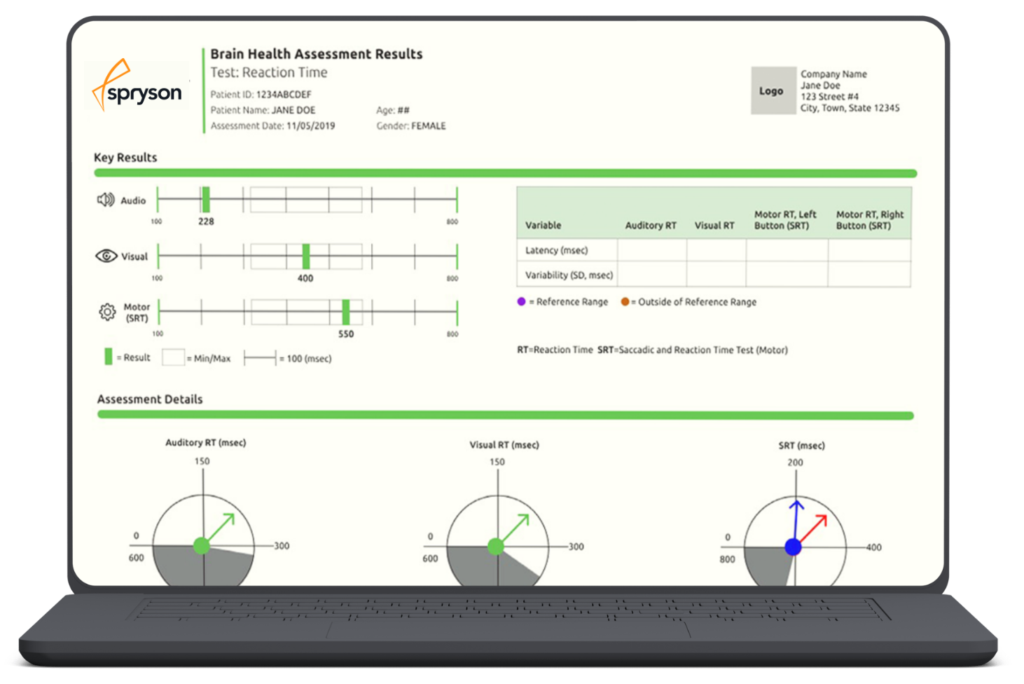
- Visual and auditory reaction time.
Who it can help
- Post-concussion syndrome and mild traumatic brain injury
- Dizziness, vertigo, and imbalance
- Visual motion sensitivity and trouble reading or using screens
- Migraine and vestibular migraine
- Lingering neurological symptoms after COVID-19
What to expect
You wear lightweight goggles with built-in infrared cameras while following lights and targets. Testing is painless and noninvasive, and the system guides you with simple instructions. We review your results report with you and use it to build your rehabilitation plan and track your progress.
What the research shows
Studies using Neuro Kinetics and Spryson eye-tracking systems show that eye movement testing can objectively detect brain injury and track recovery.
Oculomotor, Vestibular, and Reaction Time Tests in Mild Traumatic Brain Injury
Balaban, Hoffer et al., PLOS ONE, 2016
Main finding: Using the Neuro Kinetics I-Portal NOTC rotary chair and video-oculography goggles, researchers tested two groups of 50 people with mild TBI and 100 controls each. A small set of eye-movement and rotational measures identified concussion with 89% sensitivity and 97.5% specificity (AUC above 0.97).
The use of oculomotor, vestibular, and reaction time tests to assess mild traumatic brain injury (mTBI) over time
Hoffer et al., Laryngoscope Investigative Otolaryngology, 2017
Main finding: In 106 people with mild TBI and 300 matched controls, the test battery identified concussion at the first visit with 84.9% sensitivity and 97% specificity. Repeat testing over two weeks tracked recovery, and many patients still tested abnormal at the last visit.
Portable eye-tracking as a reliable assessment of oculomotor, cognitive and reaction time function: Normative data for 18-45 year old
Kullmann et al., PLOS ONE, 2021
Main finding: Normative data from 466 healthy adults aged 18 to 45, collected on the Neurolign/Neuro Kinetics NOTC chair and portable VOG goggles, set reference ranges for saccades, smooth pursuit, antisaccades, predictive saccades, and reaction time.
Oculomotor, vestibular, reaction time, and cognitive tests as objective measures of neural deficits in patients post COVID-19 infection
Kelly et al., Frontiers in Neurology, 2022
Main finding: Using the same company's portable eye-tracking goggles, 77 adults after COVID-19 were compared with 300 normative controls. Up to 86% scored outside normal ranges on 12 of 14 tests, with smooth pursuit and optokinetic responses most affected.
Product images courtesy of Spryson America, Inc. Eye-tracking systems record and measure eye movements; they do not make a diagnosis on their own. Results are interpreted by our clinicians alongside your history and a full neurological exam.
Have questions about testing?
Call 717-483-8734 or request a consultation to find out whether this testing is right for you.