
Dizziness and Vertigo Treatment in York, PA
Harcourt Brain Center in York, Pennsylvania is a next-step center for dizziness, vertigo, BPPV, lightheadedness and long-term imbalance. We especially help people whose symptoms continue after a normal workup, and people diagnosed with vestibular migraine or persistent postural-perceptual dizziness (PPPD). Dr. Adam Harcourt is a Fellow of the American Board of Vestibular Rehabilitation (FABVR). Because spinning vertigo, lightheadedness and unsteadiness have different causes, each patient is examined to find the source. Some cases, such as BPPV, may respond to an in-office repositioning maneuver that takes a few minutes. Long-standing dizziness is treated with vestibular and brain-based rehabilitation. We work alongside your ENT, neurologist or primary care doctor.
To see how we choose each part of a dizziness and vertigo plan and how strong the research is behind it, read our Clinical Rationale & Evidence page.
If your dizziness comes in attacks with migraine features, or has lingered on most days for months, read our brief on Vestibular Migraine vs. PPPD to see how the two differ and how each is treated.
If your MRI, blood work and hearing tests came back normal but you still feel dizzy, read our brief on dizziness after normal tests to learn about the common causes standard workups miss.
Brain and Vestibular Rehab Address
the Real Reason You’re Feeling Dizzy

What is Dizziness?
Dizziness is a common problem that can be caused by many different factors. Some people consider dizziness to be vertigo, which is spinning. Some consider it light-headedness when they stand up or that everything seems to be on a slant. Each of these types of dizziness have different causes, therefore we will examine to figure out what the cause of your dizziness is and address that problem. For some types of dizziness, positioning maneuvers can be performed in our office and can provide immediate relief and only take about 2-3 minutes. If you’ve been dizzy for a long time, your brain can actually change to stabilize you as much as possible. In this case we will need to provide brain rehab to correct this issue. Sometimes dizziness can be fixed very quickly and sometimes it’s been a debilitating issue long-term and no one has been able to help, yet we are able to see improvement over time. Whatever the cause, we’ll tell you honestly what we find, what we expect rehabilitation can do, and when another specialist is a better fit.
What is Vertigo?
Vertigo, or dizziness, affects millions of people around the world each year.
Vertigo occurs when the vestibular system is over-activated. This can happen from a number of things such as whiplash, infection, or a common condition known as BPPV. Another form of dizziness is lightheadedness. This happens from an area that is dysfunctional in the lower brainstem. This is different cause from vertigo and has to be addressed totally differently than if you have a vestibular problem.
Removing the cause is extremely important, but sometimes this doesn’t take care of all the issues. The brain can actually become accustom to the extra stimulation, which leaves you with a feeling of unsteadiness or imbalance.
Once your medical doctor has ruled out more serious conditions (such as vestibular neuronitis, labyrinthitis or fistulas), your dizziness/vertigo could be caused by the cerebellum or brain stem. There is something going on functionally with the way the brain interprets where you are in space. We will evaluate this and employ appropriate treatments.
Understanding Dizziness/Vertigo
In many cases, the area of dysfunction in the nervous system is the cerebellum. The cerebellum controls our coordinated movements. There are specific neurological tests that we will utilize to determine cerebellar function. For instance, Romberg’s, finger-to-nose and rapid alternating movement tests. These tests, and others, are used to determine the function of the cerebellum. Our goal is to use those tests to find out what we need to do to correct those symptoms.
Functional Dizziness/Vertigo
The brain stem is the integration point between the vestibular system and cerebellum. It controls many things, including heart rate, blood pressure, postural muscles, helps coordinate eye movements and intrinsic spinal muscles.
The vestibular system is a series of little canals in your ear that tell your brain when your head moves.
The cerebellum and brain stem work together to adapt to over-activation or under-activation by the vestibular system. When these systems are damaged or not working properly, the result is a miserable feeling of spinning, light-headedness and/or nausea. This functional dizziness/vertigo is what our doctors specializes in treating. They are very knowledgeable about all types of dizziness, whether acute or chronic, and can treat and correct a myriad of dizziness symptoms.
What is BPPV?
In Benign Paroxysmal Positional Vertigo (BPPV), the little crystals (also referred to as “rocks” or “debris”) in the ears overstimulate the canals of the vestibular system, so it thinks you’re moving when you’re not moving. Therefore, your brain stem and cerebellum have to adapt their function, so you don’t feel like you are constantly dizzy. This is why you know you’re not spinning, even though you feel like you are. Your eyes can see that you are stationary, but your vestibular system is telling your brain that you’re spinning. This improper communication to the brain is what we evaluate and treat.
BPPV is a very common form of vertigo. It is most commonly found in the posterior canals, and can be helped with things like the Epley Maneuver. However, you can also get BPPV in the horizontal or anterior canals, which can cause similar symptoms. We will test for which canal is affected and can help using other maneuvers specific to the canals affected. This additional knowledge about vertigo and the other canals is very rarely known by most doctors, and is why we are so well known for helping so many “rare” vertigo cases.
For example, you may feel like you are constantly moving to the right, but you’re not. Therefore, the cerebellum has to downplay how much it uses the input coming from the vestibular system. This overstimulation changes the way your brain works, and can cause chronic neck tightness, dizziness, balance issues, improper coordination, headaches, nausea, etc. If the cerebellum didn’t make those adaptations, it would take years to recover, if ever. So the quicker you get dizziness/vertigo treated, the less adaptation takes place in the cerebellum. Therefore, the easier dizziness is to correct. However, even if you’ve had vertigo for years, our doctors also know how to correct the brain adaptation as well as the vertigo.
Treatment for Dizziness
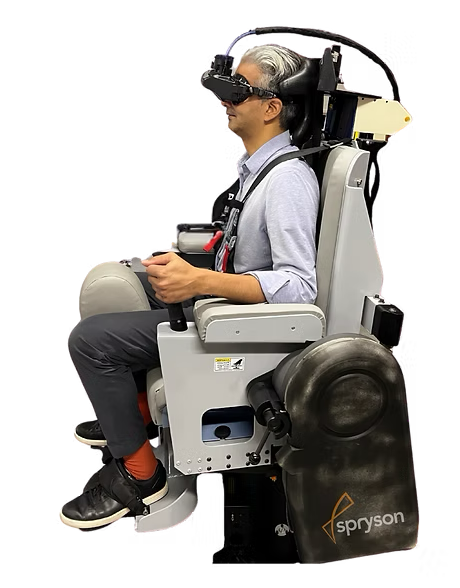
When we do your initial examination, we will perform several vestibular and neurological tests to pinpoint what is causing the breakdown that allows your dizziness to occur. Additional testing such as balance and postural analysis, reaction time and peripheral vision awareness testing, Video-oculography (VOG), or sinusoidal rotational vestibular testing may be performed as well. Treatments can include repositioning maneuvers, cervical spine proprioceptive retraining, brain rehabilitation, customized vestibular rehabilitation, eye movement therapy, neuromuscular rehabilitation, non-invasive peripheral nerve stimulation, high-frequency vibratory therapy, and/or various manual therapies. We will also teach you any necessary at-home neurological therapies. Many times we will even teach a spouse or close friend/family member a few simple positioning maneuvers you can have handy in case you have a flare-up during non-office hours or travel. Our doctors are extremely caring and thorough and our goal is to get you back to feeling normally as quickly as possible.
What Our Patients Say
Real reviews from dizziness and vertigo patients and families on Google
“I was suffering from dizziness and had completely lost hope. I had gotten all my tests done, and everything came back normal, but I still didn’t feel like myself. ... Today, I can finally say that I’ve started finding hope again.”
5 out of 5 stars on Google
“Dr. Adam is a rare find! Finds solutions that other doctors don’t. ... Has very much helped me with my vertigo.”
5 out of 5 stars on Google
“When I began seeing Dr. Harcourt I was very demoralized as vestibular migraines had taken over my life. ... I am learning to manage my migraines and have quality of life back.”
5 out of 5 stars on Google
Frequently Asked Questions
Who treats vertigo and dizziness in York, PA?
Harcourt Brain Center, at 221 W. Philadelphia St., Suite 303 in York, PA, provides vestibular rehabilitation for vertigo, BPPV, and chronic dizziness. Dr. Adam Harcourt is a Fellow of the American Board of Vestibular Rehabilitation. Call 717-483-8734.
What is the difference between vertigo and dizziness?
Vertigo is a false sense of spinning, often from an over-activated vestibular (inner ear) system such as in BPPV. Lightheadedness and feeling off-balance are different types of dizziness that can come from the brainstem or cerebellum, so each type is treated differently.
Can BPPV be treated in one visit?
BPPV can often be treated in the office with a repositioning maneuver that takes about two to three minutes. Some patients need more than one session, and any remaining imbalance can be addressed with vestibular rehabilitation.
Why am I still dizzy months later?
When dizziness lasts a long time, the brain adapts in ways that can leave you feeling unsteady even after the original cause has settled. Targeted vestibular and brain rehabilitation is used to retrain those systems.
Should I see a medical doctor first?
Yes. Seek emergency care for sudden dizziness with weakness, numbness, trouble speaking, or a severe headache. We work with patients after their medical doctor has ruled out serious conditions.
