
For Clinicians & Referral Partners
Co-managing migraine, dizziness and post-concussion patients with physicians, therapists and specialists.
Harcourt Brain Center in York, Pennsylvania is a next-step neurorehabilitation center for patients whose migraine, dizziness or post-concussion symptoms haven’t fully improved with standard care, including patients who are sensitive to medication. We work alongside the referring clinician. You remain the patient’s physician. We add objective vestibular, eye-movement and balance testing, a targeted rehabilitation plan, and written progress reports when you request them.
This page explains which patients we’re a good fit for, what workup should come first, when we send patients back to you or to emergency care, and how we keep you informed.
AT A GLANCE
- Clinician: Dr. Adam Harcourt, DC, DACNB, FACFN, FABVR, author of Mastering Migraine and Carrick Institute faculty
- Focus: refractory and medication-sensitive migraine, vestibular migraine, PPPD, persistent post-concussion symptoms, and dizziness after a normal workup
- Ages: children, adolescents and adults
- Location: 221 W. Philadelphia St., Ste. 303, York, PA 17401
- Referrals and clinician calls: 717-483-8734
- Email: info@harcourtbraincenter.com
Who to Refer
We’re most useful for patients who have been medically evaluated and still have symptoms that limit daily life:
- Chronic, refractory or medication-sensitive migraine, including patients who haven’t had enough benefit from, or can’t tolerate, preventive medications, onabotulinumtoxinA or CGRP-targeted treatments
- Vestibular migraine,[5] where vestibular rehabilitation has growing evidence as an add-on to medical management[7]
- Persistent postural-perceptual dizziness (PPPD)[6] and chronic dizziness after a normal workup
- Persistent post-concussion symptoms, such as dizziness, neck pain, headache, visual symptoms or exercise intolerance. Cervicovestibular rehabilitation is recommended when dizziness, neck pain or headaches last more than 10 days.[3]
- Recurrent or hard-to-resolve BPPV, including suspected non-posterior-canal variants[4]
- Neck-related (cervicogenic) dizziness and headache
- Dysautonomia and POTS, after cardiac evaluation, as part of a broader rehabilitation program
Recommended Workup Before Referral
Rehabilitation should follow, not replace, the appropriate medical evaluation. In general:
- Headache and migraine: a physician evaluation and neurological exam, with imaging or further testing when secondary-headache warning signs are present.[1]
- Dizziness and vertigo: primary care, ENT or neurology evaluation, with audiology and imaging as indicated, and central causes considered for acute or atypical presentations.
- Concussion: medical assessment after the injury, including emergency evaluation when indicated, to rule out structural injury.[2]
- Dysautonomia and POTS: evaluation by primary care or cardiology, including orthostatic vital signs, an ECG and other testing as indicated, to rule out cardiac and other causes.
If a patient comes to us before the workup is complete, we’ll contact you or their primary care doctor rather than delay the evaluation they need.
When We Send Patients Back to You, or to Emergency Care
We screen for warning signs during every exam and re-exam, and whenever a patient reports new symptoms. We refer the same day to emergency care, or call the treating physician, if we find signs such as:
- Thunderclap or sudden severe headache, a new headache pattern with systemic symptoms, or headache that is new or changing after age 50[1]
- New focal neurological deficits, papilledema, or altered consciousness
- Acute vestibular syndrome or other dizziness concerning for stroke, or sudden hearing loss
- Worsening symptoms after a head injury, such as repeated vomiting, worsening headache, seizures or increasing confusion
- Syncope with exertion, chest pain or palpitations suggesting a cardiac cause
- Progressive or unexplained neurological decline, or a mental health crisis
We also refer back when a patient isn’t improving as expected at planned re-evaluation points, or when exam findings point to a problem another specialist should manage.
What We Do, and What We Don’t
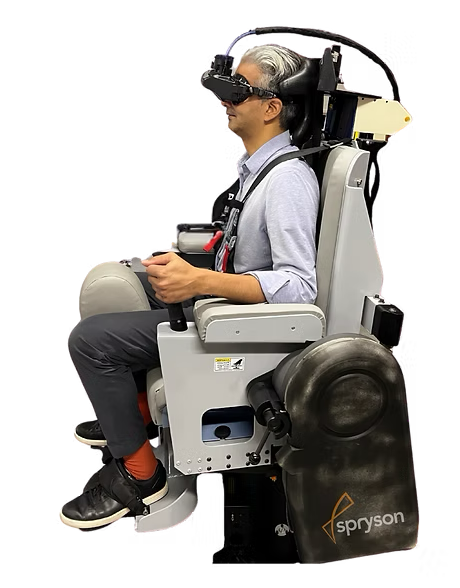
We provide: a functional neurological exam; computerized testing such as VOG eye-movement testing, sinusoidal rotational (rotary chair) testing, BTrackS balance testing and Dynavision D2 reaction-time testing; canalith repositioning for BPPV; vestibular, oculomotor, cervical and balance rehabilitation; graded exercise; and patient education with a home program.
We don’t: prescribe, start, stop or change medications; replace audiology, imaging or specialist diagnostic testing; or manage cardiac, psychiatric or acute medical conditions. Our testing measures function and gives a baseline to re-test against. It complements your diagnostic workup rather than replacing it.
For the research behind each part of our care, sorted by strength of evidence, see our Clinical Rationale & Evidence page.
For evidence summaries you can share with patients, see our condition briefs on Vestibular Migraine vs. PPPD, refractory migraine, chronic dizziness after normal tests, post-concussion dizziness and vision problems and non-drug neurorehabilitation for migraine.
How We Keep You Informed
With the patient’s written authorization, we send progress reports whenever you request them. Let us know what you’d like to receive and how often. For example:
- A findings summary after the first evaluation, covering exam and test results, our working impression, the proposed plan and the measures we’ll use to track progress.
- Progress reports after re-exams.
- A discharge summary with re-test results, outcomes and the patient’s home program.
If we find a warning sign or anything else that needs your attention, we’ll call your office directly right away. Dr. Harcourt is also glad to speak with referring clinicians about a patient before or during care.
How to Refer a Patient
- Call our office at 717-483-8734 or email info@harcourtbraincenter.com to make a referral or to arrange a clinician-to-clinician call with Dr. Harcourt.
- Email relevant records to info@harcourtbraincenter.com: the reason for referral, diagnoses, a current medication list, recent imaging, lab and audiology or vestibular test results, and any warning signs already ruled out.
- We schedule the patient and let your office know when the evaluation is complete. We send progress reports as you request them.
Please don’t send patient health information through our website contact form. Email records to info@harcourtbraincenter.com instead.
Practical details for your patients: Harcourt Brain Center is a fee-for-service office and provides superbills for insurance reimbursement. We’re a participating Medicare provider (Medicare doesn’t cover the initial exam fee), and PPO patients can be seen with out-of-network reimbursement. See Payment Information. For patients who live farther away, our Remote Migraine Program offers remote migraine care.
Education for Your Practice
Dr. Harcourt teaches doctors through the Carrick Institute and speaks on migraine, vestibular disorders, concussion and dysautonomia. He’s available for in-office lunch-and-learns and case discussions with York-area practices, therapy clinics and sports medicine programs. To schedule one, call 717-483-8734 or email info@harcourtbraincenter.com. See his speaking engagements and research and media appearances.
Frequently Asked Questions
Will you change my patient’s medications?
No. We don’t prescribe, start, stop or change medications. The prescribing clinician stays in charge of medication management, and we’ll tell you if a patient reports side effects or changes.
Can my patient continue physical therapy or other care while seeing you?
Yes. We coordinate with physical therapists and other practitioners as needed, so care doesn’t overlap or conflict.
Do you see patients without a referral?
Yes. Many patients refer themselves. With the patient’s permission, we send our findings to their primary care doctor and any treating specialists.
Do you see children?
Yes. We see children, adolescents and adults, including young athletes after concussion.
What happens if my patient isn’t improving?
We re-test at planned checkpoints. If a patient isn’t improving as expected, we discuss changing the plan, pausing care or referring back to you.
This page is for healthcare professionals and doesn’t replace clinical judgment. Patients with emergency warning signs should be sent to the nearest emergency department or told to call 911.
Medically reviewed by Dr. Adam Harcourt, DC, DACNB, FACFN, FABVR. Last reviewed October 2026.
References
- Do TP, et al. Red and orange flags for secondary headaches in clinical practice: SNNOOP10 list. Neurology. 2019;92(3):134-144. PubMed 30587518
- Patricios JS, et al. Consensus statement on concussion in sport: the 6th International Conference on Concussion in Sport-Amsterdam, October 2022. Br J Sports Med. 2023;57(11):695-711. PubMed 37316210
- Schneider KJ, et al. Targeted interventions and their effect on recovery in children, adolescents and adults who have sustained a sport-related concussion: a systematic review. Br J Sports Med. 2023;57(12):771-779. PubMed 37316188
- Bhattacharyya N, et al. Clinical Practice Guideline: Benign Paroxysmal Positional Vertigo (Update). Otolaryngol Head Neck Surg. 2017;156(3_suppl):S1-S47. PubMed 28248609
- Lempert T, et al. Vestibular migraine: Diagnostic criteria. J Vestib Res. 2022;32(1):1-6. PubMed 34719447
- Staab JP, et al. Diagnostic criteria for persistent postural-perceptual dizziness (PPPD): Consensus document of the committee for the Classification of Vestibular Disorders of the Bárány Society. J Vestib Res. 2017;27(4):191-208. PubMed 29036855
- El Ahdab J, et al. The effect of vestibular rehabilitation in the management of vestibular migraine in adults: A systematic review and meta-analysis. Headache. 2026;66(1):77-87. PubMed 41288240